
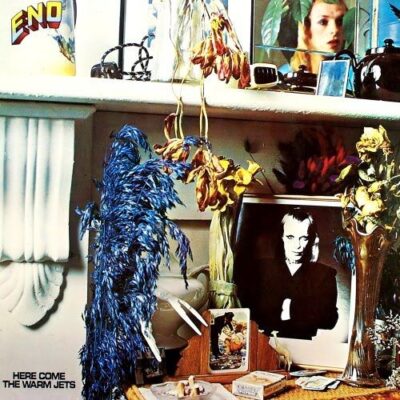
Here Come the Warm Jets marks Brian Eno’s daring debut as a solo artist, stepping away from his role in Roxy Music to forge his own experimental path. Released in 1974, the album fuses art rock, glam, and avant-garde soundscapes, creating a sound that was as innovative as it was unpredictable. Eno, with his love for sonic exploration, blends layers of electronics, guitars, and strange, distorted vocals to create a sound that feels otherworldly and completely fresh.
The album kicks off with the frenetic “Needles in the Camel’s Eye,” a track that blends swirling synthesizers with jittery guitars, giving listeners a taste of what’s to come—a world where structure bends and sounds collide in unexpected ways. “The Paw Paw Negro Blowtorch” features a quirky, percussive groove, while “Baby’s on Fire” emerges as the album’s standout, a scorching, electric anthem that captures Eno’s knack for creating tension through unusual rhythms and unsettling lyrics.
Eno’s experimentation with studio techniques shines through in tracks like “Driving Me Backwards,” where loops and tape manipulation create a disorienting, dreamlike atmosphere. At times playful, at other times abrasive, the album offers glimpses of what Eno would later develop into the ambient soundscapes that would define much of his solo career. Yet, Here Come the Warm Jets is more rooted in rock, with its off-kilter energy and biting commentary, making it both accessible and elusive.
Critically, Here Come the Warm Jets was a revelation, signaling a new era for avant-garde rock music and marking Eno as a pioneering figure. Though it wasn’t a commercial smash at the time, it’s now recognized as one of the most influential albums of the 1970s, laying the groundwork for the boundary-pushing sound that would characterize both his future solo work and his collaborations with artists like David Bowie and Talking Heads.
